News in November 2026
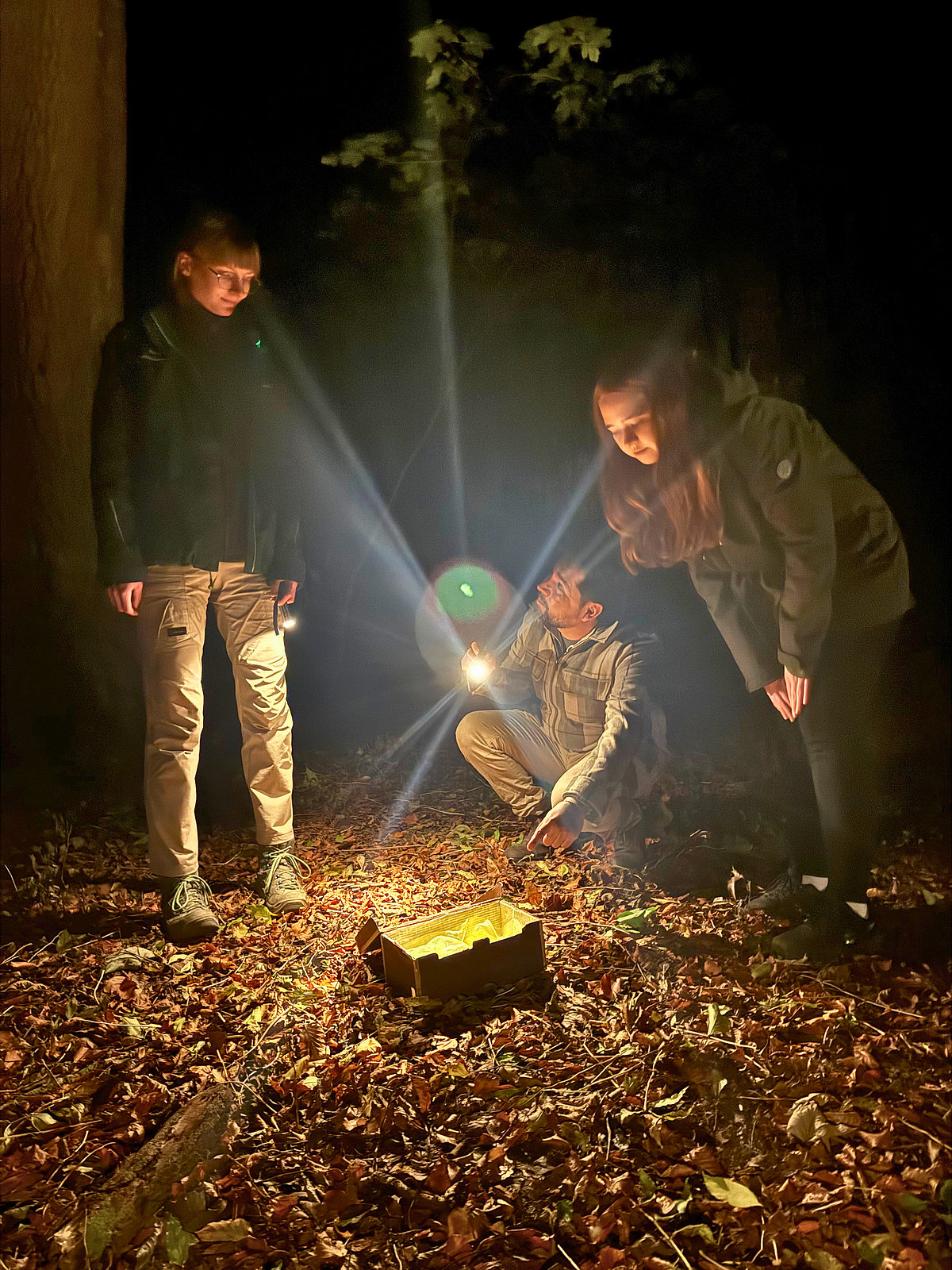
A Night at the Museum: The Secret Magic of the Forest
On Saturday 7 November, the National Park Centre will open its doors from 5.30 pm to 9 pm for an extraordinary night.
In the dimly lit interactive exhibition, young and old sleuths alike will follow clues on a mystery rally and search for hidden keys. An interactive story featuring Mimi, Krax and mysterious forest creatures will bring the cinema to life at 6 pm, 7 pm and 8 pm.
Outside, night walks lead into the dark beech forest. They set off every 30 minutes between 5.30 pm and 7.30 pm and are available by prior booking only. A torch is an absolute must-have. By the fire pit, you’ll find bread on a stick, punch and organic bratwurst, whilst the forest oracle has spirit animals and messages from the trees in store.
Admission costs €10 for adults, €6 for children (aged 6–14) and €22 for families. Thanks to the VVR, bus services are available on the evening of the event between Sassnitz, the Hagen main car park and the Königsstuhl for both arrival and departure.
Winter at the Königsstuhl and in the Waldhalle
Now that the days are getting shorter, the KÖNIGSSTUHL National Park Centre is open daily from 1 November to 31 March, from 10 am to 5 pm.
The Waldhalle UNESCO World Heritage Forum is open during this period from Friday to Sunday, from 11 am to 4 pm. This means it remains an informative stop-off point for walkers on the Hochuferweg trail, even in winter.
Please note the following regarding opening hours on 11 and 16–20 November
On Wednesday 11 November, the KÖNIGSSTUHL National Park Centre will be closed due to a staff outing. The Königsstuhl Skywalk and the outdoor area can still be visited.
From 16 to 20 November, the interactive exhibition will undergo its annual maintenance: It will be thoroughly cleaned and technically inspected and will therefore remain closed. The Skywalk, the World Heritage Cinema, the short guided tours, the bistro and the shop will remain open. A reduced-price mini-ticket is available for these days.
A sporty end to the season at the Sassnitz Pier Run
Before November sets in, the 7th Sassnitz Pier Run on 31 October from 11.00 am invites you to the sporting end-of-season event at the town harbour. The programme features a route of around 4.5 kilometres for walkers and runners, as well as an 800-metre children’s and charity run. The KÖNIGSSTUHL National Park Centre is supporting the event again this year. Krax will also be there, cheering on participants of all ages at the foot of the pier. Further information on the Pier Run can be found here.
The new Living Planet Report 2026 is here
On 8 October 2026, the WWF published the 16th edition of the Living Planet Report. Every two years, the WWF uses scientific analyses to assess the state of our planet’s health. The focus is on the Living Planet Index (LPI), which measures global biodiversity and tracks population trends over the past decades.
The LPI shows an average overall decline of 73 per cent in the wild animal populations monitored between 1970 and 2022. But what does that mean in concrete terms? 50 per cent of populations therefore continue to show a negative trend. But looking on the bright side, it can also be noted that the remaining populations are stable or growing. The Living Planet Report therefore also gives us cause for hope: we can preserve our living planet! There are many examples of successful species conservation measures.
One such success story is unfolding right on our doorstep. Whilst Eurasian lynx were wiped out across large parts of Central Europe at the start of the 20th century, the WWF has managed to increase lynx populations in several German federal states.
About the Living Planet Report: wwf.de/lpr2026